
For distributors serving semiconductor, electronics, pharmaceutical, laboratory, and other controlled-environment industries, product quality is only one part of a successful supply strategy. Packaging, labeling, product identification, and consistent replenishment also affect how efficiently products can be sold and managed.
Cleanroom consumables with custom packaging allow distributors to offer products under their own brand, maintain a consistent product presentation, and build a more recognizable portfolio without necessarily establishing their own manufacturing facilities.
Working with a supplier that offers multiple cleanroom and ESD product categories can also simplify sourcing. Instead of coordinating separate suppliers for wipes, gloves, sticky mats, and garments, distributors may be able to consolidate orders and packaging requirements through one partner.
Which Cleanroom Consumables Can Be Supplied with Custom Packaging?
Custom packaging options depend on the product, packaging material, order quantity, and destination-market requirements. Distributors should confirm available formats and artwork specifications with the supplier before placing an order.
1. Cleanroom Wipes
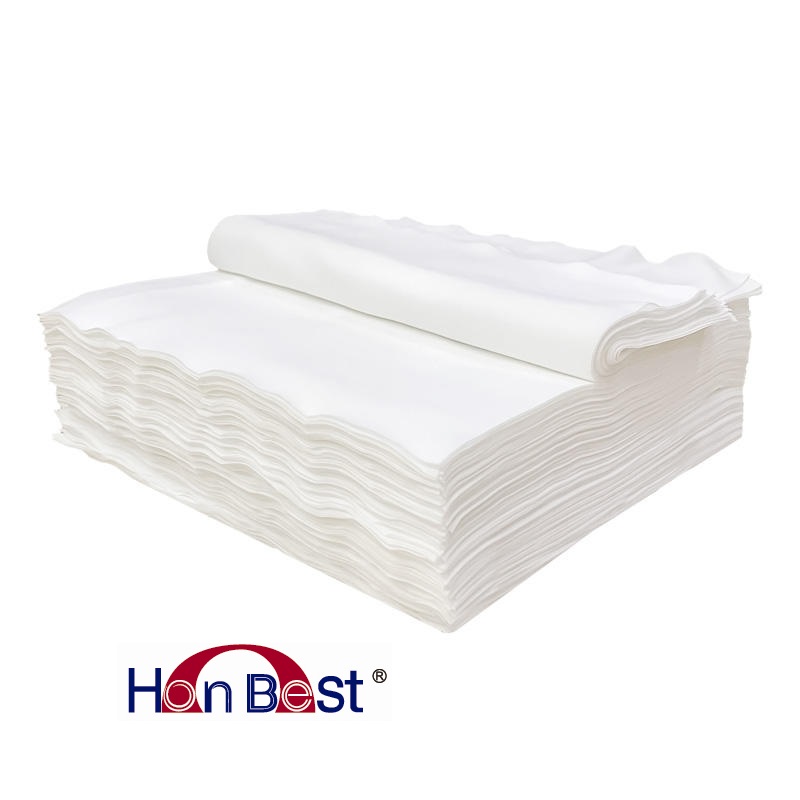
Cleanroom wipes are widely used in electronics manufacturing, semiconductor production, precision assembly, and laboratory environments. Different applications require different materials and cleanliness levels.
Common options include:
- Polyester cleanroom wipes
- Microfiber cleanroom wipes
- Polyester-cellulose nonwoven wipes
- Laser-cut or sealed-edge wipes
- Sterile or pre-wetted wipes, where available
For private-label programs, distributors can ask about custom printed bags, branded labels, carton markings, product codes, and packaging configurations. The packaging should identify the correct wipe material, dimensions, quantity, edge treatment, and applicable cleanliness classification.
For example, a distributor might sell several wipe grades under one brand. Clear product codes and differentiated labels can help customers distinguish the products while keeping the overall brand identity consistent.
Explore Honbest products:
- Cleanroom Wipers — Browse the cleanroom wiper range.
- Microfiber Cleanroom Wipers — View microfiber options and specifications.
2. Cleanroom Gloves and Finger Cots
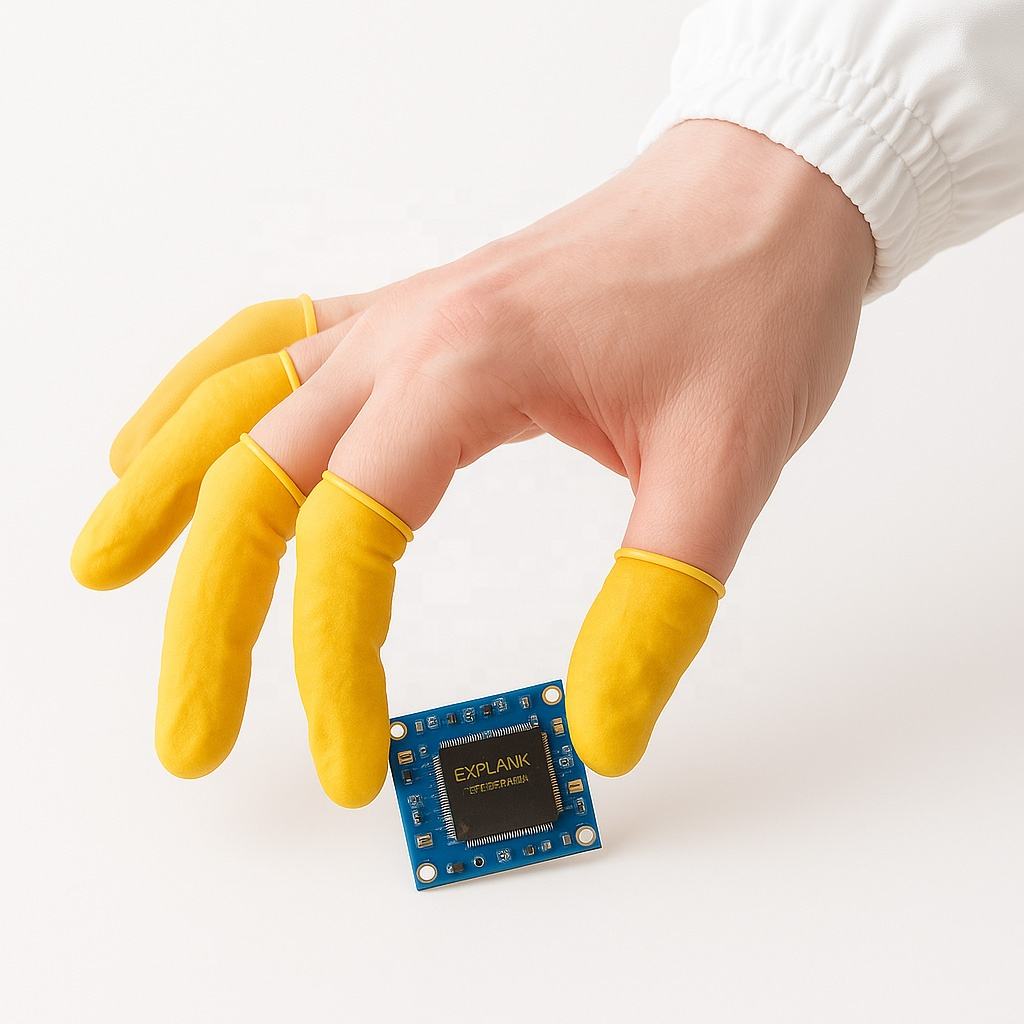
Cleanroom gloves and finger cots are used where hand contamination, particles, or material compatibility must be controlled.
Depending on the product and supplier, packaging options may include branded outer cartons, product labels, printed bags, or customized packing quantities.
Before approving a private-label glove, distributors should verify the material, dimensions, cleanliness requirements, surface treatment, powder status, and relevant test documentation. Packaging artwork should not imply a certification, performance level, or application suitability that has not been verified for the product.
Explore Honbest products:
- Cleanroom Gloves — Browse cleanroom glove options.
- Class 100 / ISO 5 Nitrile Gloves — Review the product range and specifications.
3. Sticky Mats and Adhesive Products
Sticky mats are commonly used at entrances to controlled areas to help capture particles carried on footwear and wheels. Sticky rollers and related adhesive products may also form part of a cleanroom consumables portfolio.
Potential packaging customization includes:
- Branded carton labels
- Product identification labels
- Custom carton markings
- Distributor information and item codes
- Packaging quantities suited to the distributor’s sales channel
For sticky mats, confirm dimensions, number of layers, color, adhesive strength, and packaging configuration. If multiple adhesive strengths are offered, a clear SKU system can reduce confusion during warehousing and repeat orders.
Explore Honbest products:
- Sticky Mats — View PE sticky mats and other available mat options.
- Sticky Rollers — Review sticky roller options and packaging information.
4. ESD Garments and Accessories
ESD products may include antistatic garments, coats, jackets, trousers, shoe covers, wrist straps, and related accessories.
Distributors building an ESD product line can ask about branded bags, size labels, garment identification, carton markings, and product-specific labels. Garment specifications such as fabric construction, surface resistance, size, and color should remain clear in the product documentation.
Custom packaging does not replace the need to verify ESD performance or applicable standards. Where customers require test reports or conformity documents, these should be checked against the actual product being supplied.
Explore Honbest products:
- ESD Jacket and Pants — View ESD garment styles and customization information.
- ESD and Cleanroom Products — Browse the broader product catalog.
5. Cleanroom Paper, Swabs, and Other Consumables
Cleanroom paper, swabs, masks, shoe covers, hair covers, and other disposable products may also be suitable for private-label programs, subject to supplier capabilities and minimum order quantities.
For distributors serving several customer industries, grouping complementary products under one brand can make catalog management and repeat purchasing more straightforward.
Explore Honbest products:
- Cleanroom Paper — View cleanroom printing paper options.
- Cleanroom Swabs — Review swab types and product details.
- Nonwoven Shoe Covers — Browse disposable shoe cover options.
- Nonwoven Products — Explore additional disposable products.
Custom Packaging Options for Cleanroom Distributors
“Custom packaging” can refer to several different levels of customization. Defining the required level early helps suppliers quote accurately and reduces unnecessary development costs.
| Packaging option | Typical application | What to confirm |
|---|---|---|
| Custom product label | Existing standard packaging | Label size, artwork, language, SKU |
| Branded outer carton | Wholesale and bulk orders | Carton design, dimensions, case quantity |
| Printed inner bag | Individual or multipack products | Material, printing method, MOQ |
| Private-label packaging | Distributor-owned brand | Artwork approval, production lead time, repeat-order control |
| Custom packing quantity | Different sales channels | Units per bag, bags per carton, carton weight |
| Market-specific labeling | Products sold in different countries | Required language, warnings, traceability, applicable regulations |
Not every product supports every option. For example, printing directly on a packaging film may require a different minimum order quantity from applying a custom label to standard packaging. Sterile products may also require packaging controls that differ from those used for non-sterile consumables.
How Distributors Should Evaluate a Custom Packaging Supplier
A supplier should be assessed on more than whether it can print a logo. The key question is whether it can maintain consistent product specifications and packaging across initial and repeat orders.
Product range and manufacturing capability
Check whether the supplier manufactures the products itself, sources selected items from partner factories, or uses a combination of both. This distinction matters when evaluating quality control, production schedules, and responsibility for resolving product issues.
A supplier with a broad range of cleanroom and ESD consumables may simplify purchasing, but distributors should still verify the manufacturing source and technical documentation for each product category.
Artwork approval and packaging samples
Before mass production, agree on the final artwork, label content, barcode or SKU requirements, packaging dimensions, and carton markings. Where appropriate, request a packaging sample or pre-production approval.
The approval process should make clear which party is responsible for artwork preparation, translation, proof checking, and final sign-off.
Minimum order quantities and cost structure
Custom packaging can involve setup fees, printing plates, special materials, or minimum production runs. Ask suppliers to quote the product and packaging separately where practical.
A useful quotation should identify:
- Product specification and unit price
- Packaging format and customization cost
- Minimum order quantity
- Quantity per inner pack and outer carton
- Sample or artwork charges, if any
- Production lead time
- Shipping terms and quotation validity
Comparing quotations on the same specification is essential. A lower unit price may not represent better value if it requires a much larger packaging order or introduces additional inventory risk.
Quality consistency and traceability
For repeat orders, distributors should agree on a process for controlling product specifications, packaging artwork revisions, batch identification, and any required inspection records.
Keep an approved reference for the product and packaging version. If a supplier changes a material, packaging format, or label, the change should be reviewed before it affects future shipments.
Export experience and communication
Distributors often need packaging that meets local language and labeling expectations. Confirm whether the supplier can support the target market, communicate changes promptly, and provide the documents required for the specific products.
Do not assume that a generic certificate applies to every item in a supplier’s catalog. Request documents relevant to the exact product, model, and intended market.
How to Start a Private-Label Cleanroom Consumables Project
A straightforward process can help distributors avoid delays and reduce errors.
- Select the products. List the product categories, materials, dimensions, cleanliness requirements, and expected order quantities.
- Define the packaging. Specify label-only customization, printed bags, branded cartons, or a complete private-label format.
- Prepare the artwork. Supply the logo, brand colors, item codes, language requirements, and any approved product information.
- Confirm cost and MOQ. Request a breakdown of product cost, packaging charges, and any setup fees.
- Approve samples or proofs. Check the printed information, product identification, packaging dimensions, and overall presentation.
- Confirm production controls. Agree on specifications, approved artwork versions, inspection requirements, and change notifications.
- Plan repeat orders. Keep product codes and packaging files consistent so future orders can be reproduced with fewer revisions.
Distributors should also consider how much inventory they want to hold. Launching a private-label program with a small selection of high-demand products may be more manageable than customizing an entire catalog at once.
Honbest: A Potential Supply Partner for Distributor Programs
Honbest supplies cleanroom and ESD consumables, including cleanroom wipes, cleanroom paper, sticky products, gloves, and ESD-related products. For distributors seeking a broader portfolio from China, Honbest is a potential supplier to evaluate for product sourcing and custom-packaging discussions.
The most suitable arrangement depends on the product and order requirements. Distributors should confirm which items support private-label packaging, the available packaging formats, minimum order quantities, lead times, and documentation before committing to a program.
A practical starting point is to shortlist several core products—such as polyester wipes, sticky mats, or selected ESD consumables—and request quotations based on the same specifications. This makes it easier to compare cost, packaging flexibility, and supply arrangements.
Information to Include in Your RFQ
To receive a useful quotation, distributors should provide as much of the following information as possible:
- Product name, material, size, and required specification
- Required cleanliness grade or performance criteria
- Expected order quantity and estimated annual demand
- Packaging format and quantity per pack
- Logo artwork and preferred label language
- Required barcode, SKU, batch, or traceability information
- Destination country and applicable labeling requirements
- Sample requirements and target delivery schedule
If the artwork is not ready, begin by requesting standard packaging options and estimated MOQs for customization. The supplier can then clarify which decisions must be finalized before production.
Frequently Asked Questions
Can I sell cleanroom consumables under my own brand?
Often, yes. Many suppliers offer some form of private-label packaging, but the available products, printing methods, and minimum order quantities vary. Confirm the details for each product before placing an order.
Do all products have the same custom packaging MOQ?
No. The MOQ may depend on the product, packaging material, printing method, artwork setup, and whether standard packaging can be adapted. Request product-specific MOQs rather than assuming one quantity applies to the entire catalog.
Can I customize the packaging without changing the product?
In many cases, distributors can retain a supplier’s standard product specification and customize the external label, bag, or carton. Confirm that the proposed packaging is compatible with the product and does not affect its cleanliness, integrity, or required performance.
What should I check before approving private-label packaging?
Check product identification, dimensions, material, quantity, spelling, language, barcode or SKU, carton markings, and any required regulatory information. Also confirm that claims printed on the package match the supporting product documentation.
Is it better to customize every product at once?
Not necessarily. Starting with a few high-demand products can help distributors validate demand, packaging workflows, and order quantities before expanding the range.
Conclusion
Custom packaging can help cleanroom consumables distributors build a recognizable brand, organize their catalog, and offer a more consistent purchasing experience. The strongest programs combine clear product specifications, practical MOQs, approved artwork, reliable quality controls, and a repeatable replenishment process.
For distributors evaluating cleanroom consumables from China, Honbest is one potential partner to contact about product availability and packaging options. A product-by-product RFQ is the best way to establish what can be customized, at what cost, and under which production conditions.
Post time: Oct-22-2026